 PROJECT.04 / 07
Print Design / 2024
NDPP Healthier You
A 200-page wellbeing journal for the NHS National Diabetes Prevention Programme, structuring nine months of behaviour change into daily and weekly check-ins that feel like a companion, not a clipboard.
The NHS National Diabetes Prevention Programme asks participants to track complex health data across a nine-month journey: the kind of commitment that falls apart fast when the tracking tool feels like paperwork. Thrive Tribe delivers this under the Healthier You programme, and needed a companion journal.
Three problems had to be solved together: combat information overload by turning dense clinical guidance into a navigable editorial experience; encourage consistency in daily and weekly check-ins without making users feel burdened; and build something that works as both a tracking journal and a reference tool for the programme's educational content.
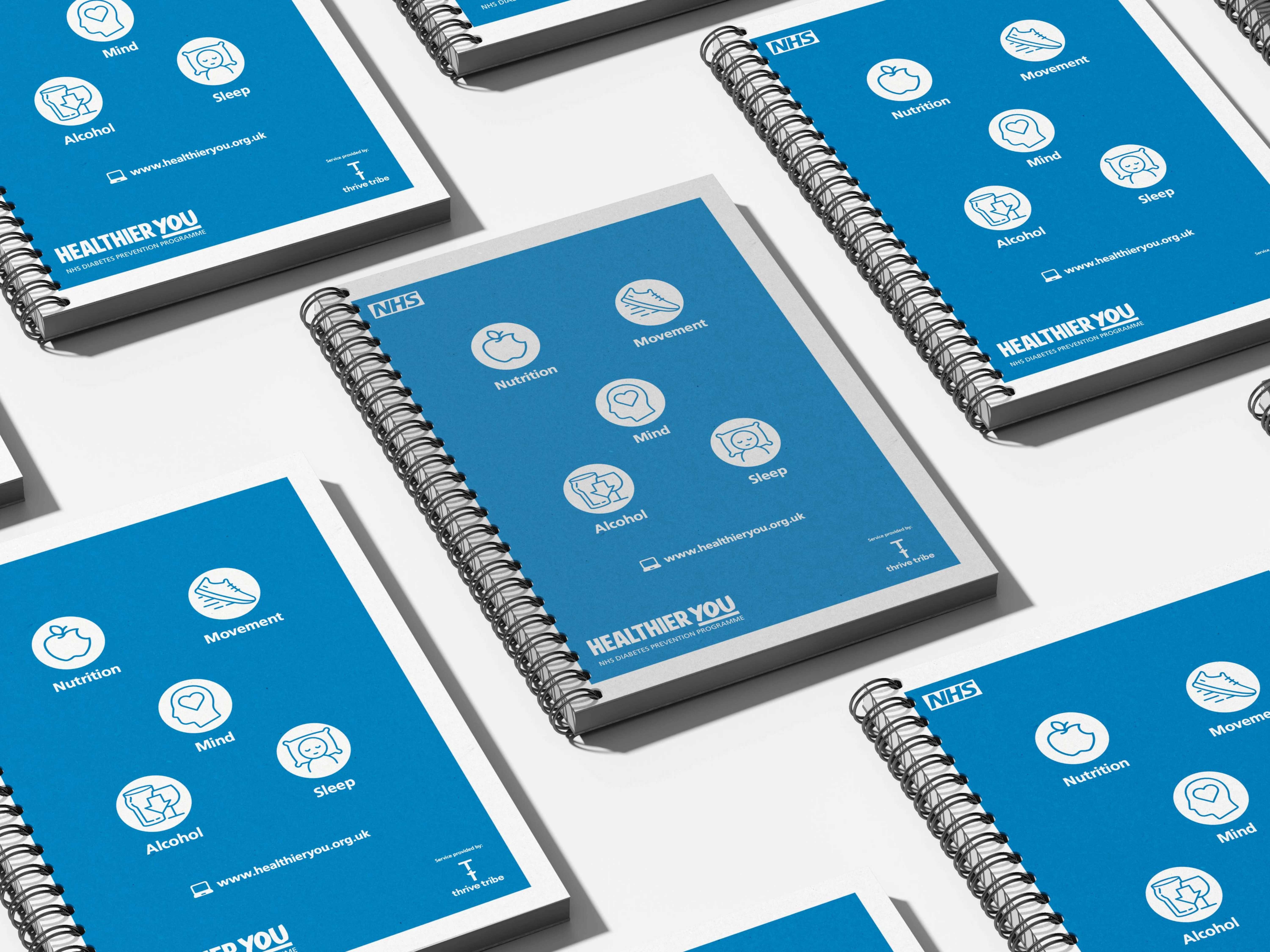
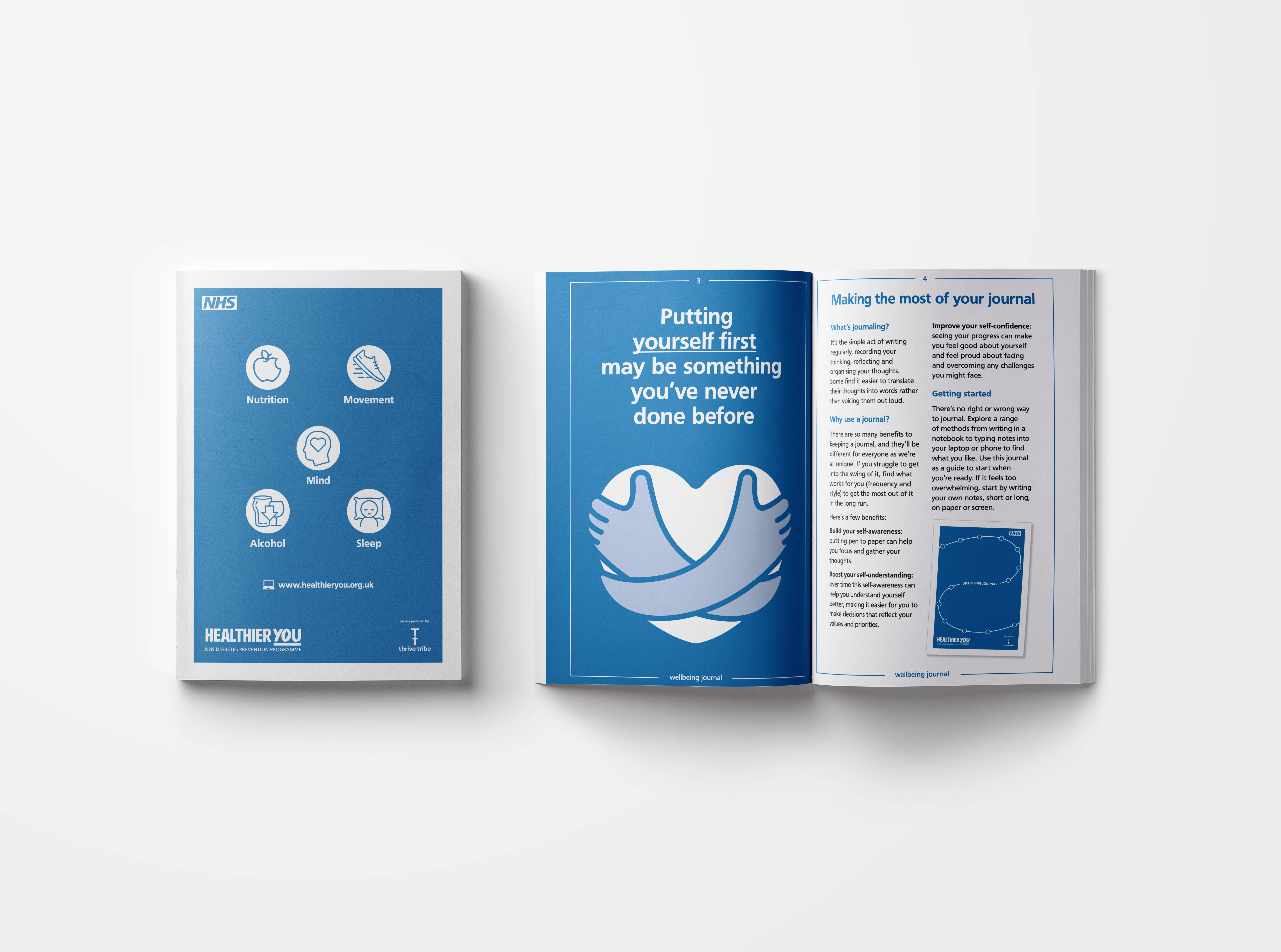
// Five pillar icons on the cover (Nutrition, Movement, Mind, Alcohol, Sleep) signal scope before you open a page.
I built the journal as a structured framework rather than a workbook, one that gives users ownership of their health data instead of asking them to log it for someone else.
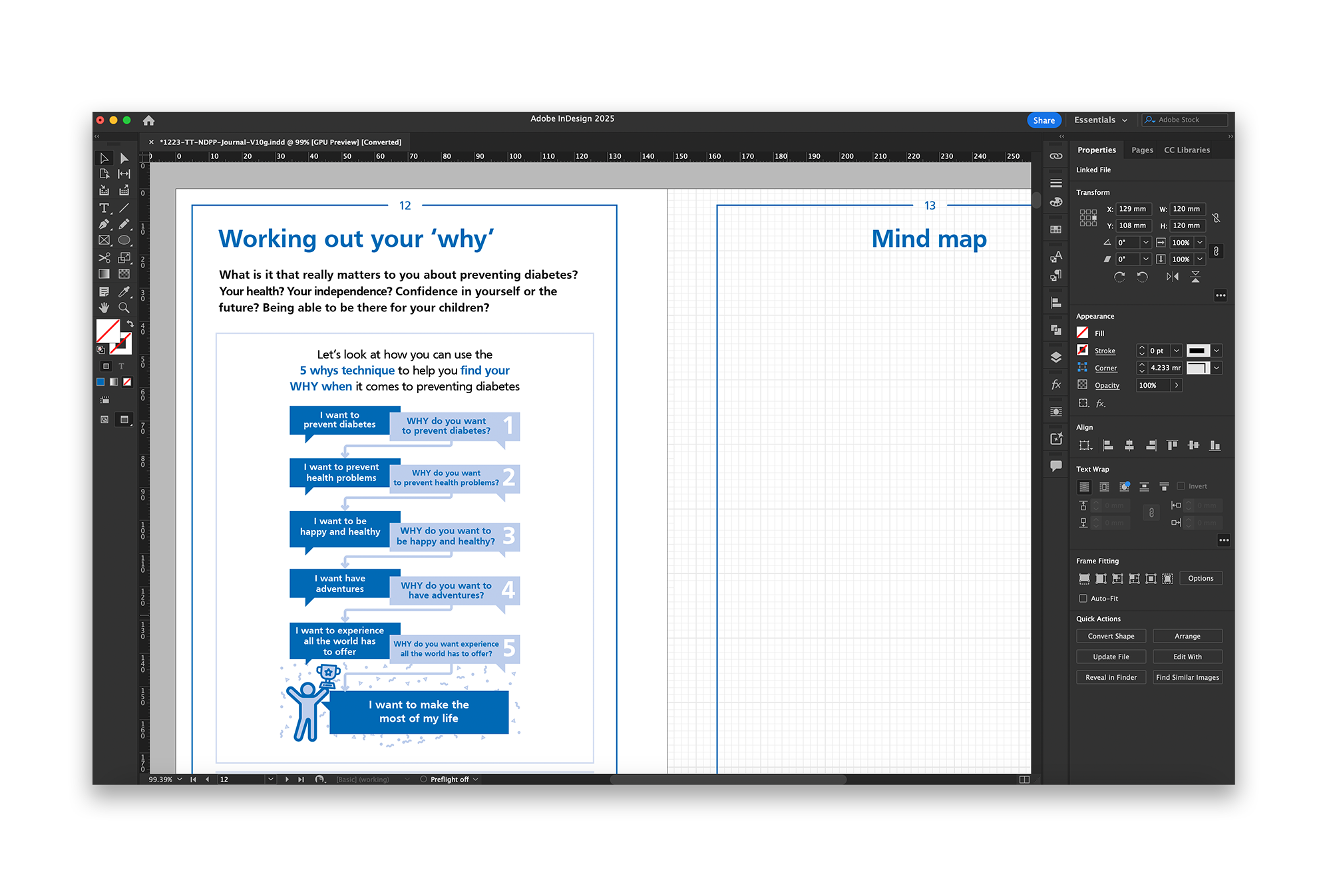
For the instructional design, every daily and weekly check-in is a self-contained spread: a pre-framed prompt, a space to answer, and a confidence rating on the same 1–10 scale throughout. This reframes tracking as reflection ("what did I learn", not "what did I do"), and it draws structurally from evidence-based behaviour-change frameworks (circles of control, 1% experiments, habit stacking, the four laws of habit formation) rather than inventing from scratch.
For visual scannability, I leaned on clear typography and a custom infographic language so educational pages stay quick to reference mid-session.
Scale is what made InDesign non-negotiable. Master spreads, paragraph styles, and a tight pagination system meant late-stage content updates didn't require redesigning the book.
A companion, not a clipboard.
// 1% progress experiment: small reflective prompts, sized for a kitchen-counter glance.
// Building new habits: habit stacking framed as something achievable.
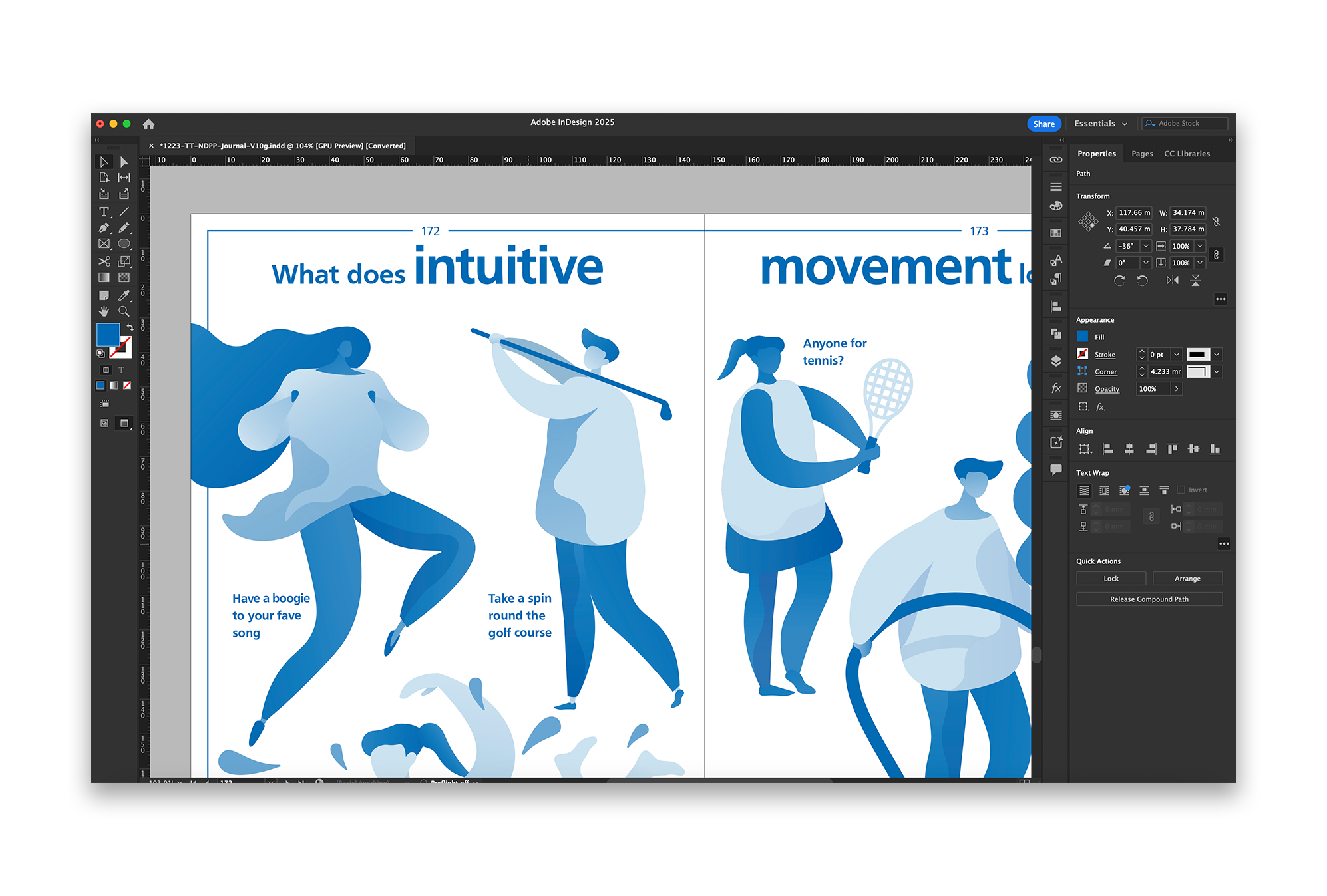
// Intuitive movement: choosing how to move, not what to track.
The journal delivered a tangible, high-quality tool that bridges NHS clinical advice and participants' daily lives. Empowered tracking gives users a clear, organised view of their progress; integrated goal-setting prompts and reflection sections sustain engagement across the full programme lifespan; and simplified infographics let users pull up educational content mid-session without digging through a manual.
Feedback was strong across NHS NDPP cohorts, and the journal has since become the reference format for how the wider programme structures long-duration participant resources.